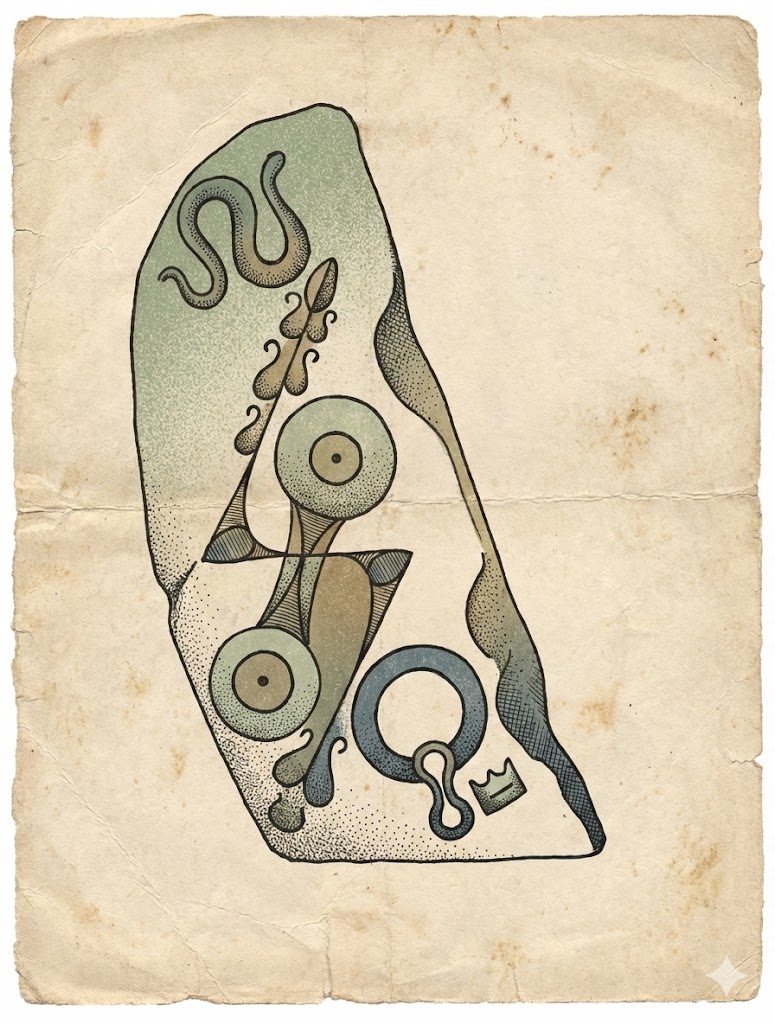
The Navigation Room at 2 AM had a particular quality—the hum of equipment holding coherence against entropy, indicator lights cycling through their patterns, the smell of solder and coffee that Amara Okonkwo had come to associate with impossible deadlines.
She'd been here for eighteen hours. David had been here longer—straight from the airport, barely stopping to drop his bag.
"Try it now," she said, not looking up from her terminal.
David entered the command sequence. On the central display, the interface flickered, processed, returned an error.
"Same thing." He rubbed his eyes. "The pattern-recognition layer isn't integrating with the grammar database. It keeps treating the Pictish symbols as noise instead of signal."
Amara pushed back from her workstation and crossed to where David sat. Three weeks they'd been building this—an AI system designed to find patterns in navigation data that humans couldn't see. The core was Google's research-grade model, not the commercial releases. On top of that, they'd layered optimization methods that searched solution spaces without human assumptions, finding configurations that looked wrong to trained physicists but worked better than anything intuition suggested.
"The problem is the training data," Amara said, studying the error logs. "The system needs examples of successful outcomes to optimize toward. We have three successful navigation sessions and one catastrophic failure. That's not enough signal to …