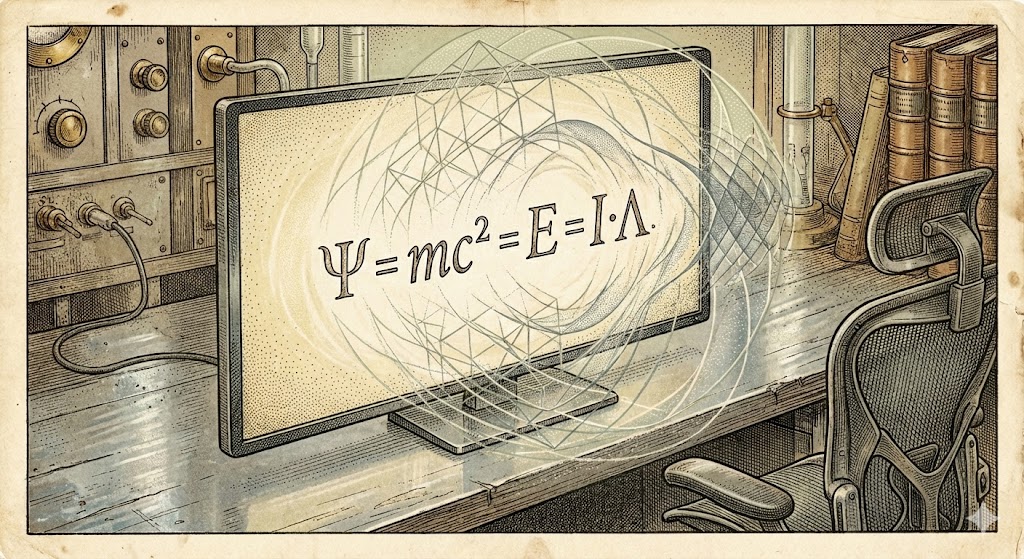
Susan had spent her career moving between two ways of knowing.
In the field: boots on serpentine soil, hands sorting specimens, the patient accumulation of observation. At the desk: equations, models, mathematical abstractions that turned data into understanding. Both essential. Both incomplete. The field gave her contact with reality but not comprehension. The models gave her comprehension but not contact—elegant structures she could only view through screens, never touch.
Now Amara was offering to collapse that distance.
"The prototype is ready," Amara said. They had gathered in the Navigation Room—all six of them, plus ARCHIE's presence humming through the displays. "Three days of testing. The components work. The interface with ARCHIE is stable. What we don't know is what happens when a human consciousness engages with it."
The AR glasses sat on the central console, looking deceptively ordinary. Lightweight frames, transparent lenses, a thin mesh of sensors that would rest against the temples.
"The neural feedback loops amplify existing substrate sensitivity," Amara explained. "Everyone here has trace iridium in their neural tissue. The glasses don't create a new connection—they make an existing connection conscious."
"What's the worst case?" Susan asked.
"Permanent alteration of perceptual processing," ARCHIE said. "The brain learns to perceive the chronicle and cannot unlearn it. You would experience substrate activity constantly, wit…