Chapter
THE CALIBRATION
1,561 words · 8 min read
Susan had driven through the night from Davis.
Three weeks since Bear Valley. Three weeks of running her CGR data through every analytical method she knew, watching the organization refuse to resolve into anything her training could explain. The structure in the non-coding DNA was real—she'd verified it six ways, different samples, different sequencing runs, the same impossible ordering emerging every time.
Her serpentine ecology gave her no purchase. Her metapopulation theory couldn't touch it. Even her old phylogenetics training only whispered suggestions she couldn't quite hear. The organization looked like something. Like a tree structure, like nested hierarchies, like the architecture of descent with modification.
But that made no sense. Non-coding DNA in buckwheat plants, organizing itself into cladistic structures? There was no mechanism. No selective pressure. No reason.
She'd emailed David at 2 AM: I need access to better computational resources. Can I come to Ames?
His response had come within minutes: Come. There have been developments.
David met her in the lobby, and she knew immediately that something had shifted.
The man she'd met at Bear Valley had been intense, focused, a physicist chasing an anomaly. The man standing before her now looked like someone who'd seen the anomaly chase back.
"Susan. Thank you for coming."
"Your email said 'developments.' That's a word that covers a lot of territory."
"It does." He gestured toward the security checkpoint. "Come to the lab. It's easier to show you."
The lab was larger than she'd expected, dominated by optical tables and laser assemblies. But Susan's attention went to the people.
A young Black woman at a workstation—Amara Okonkwo, David said, the engineer who'd built the portable detector. An older woman with short gray hair and a weathered field scientist's face—Margaret Blackwood, the geologist from London. And in the corner, sitting in a borrowed chair, was David Coyote. Starseed. The man from the Wilbur flumes.
He looked smaller here, diminished by the clinical setting. His eyes met hers, and she saw exhaustion, fear, and something that might have been relief.
"Dr. Blackwood." Susan shook her hand. "David mentioned your work—platinum group elements at extinction boundaries?"
"That's right. Anomalous concentrations and crystallographic ordering across multiple boundaries. Not just K-Pg."
Susan frowned. "The other major extinctions don't have confirmed impact signatures."
"No. They don't." Margaret's mouth quirked. "Which made my findings rather difficult to publish."
Susan looked around at the assembled group. "What the hell is happening here?"
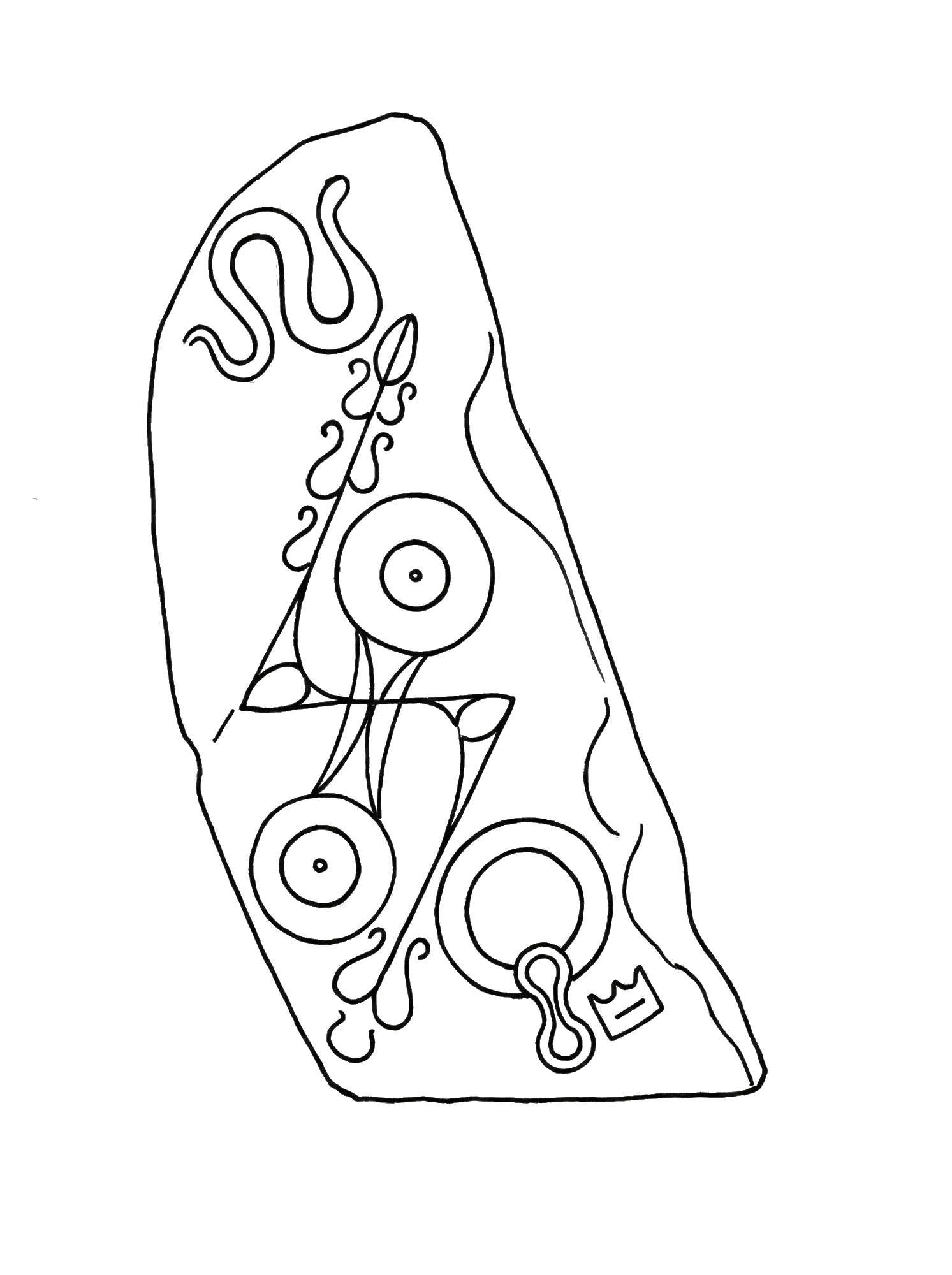
David gave her the compressed version: the global distribution of the anomalous material, the Pictish stones placed at sites where that geology surfaces, the Scottish artifact with coherence values beyond anything they'd measured. And Starseed—his drawings reproducing Pictish iconography he'd never seen.
Susan listened, her field biologist's mind sorting observation from interpretation. The iridium wasn't just present in her buckwheat plots. It appeared at impact boundaries worldwide, showed unusual molecular organization, and correlated somehow with what Starseed experienced.
"And him?" She nodded toward Starseed. "Where does he fit?"
"His visions correlate with iridium concentration," David said. "We measured it in real-time at Wilbur. His drawings match Pictish symbols from fifteen hundred years ago. Whatever's happening at those sites, his neurology responds to it."
"I made up stories to explain it," Starseed said. His voice was rough, unfamiliar without the guru's smooth cadence.
The lab door opened. Jennifer walked in, read the room in an instant, and went to Starseed first. Her hand on his shoulder, a murmured exchange Susan couldn't hear. Something in his posture eased.
Then Jennifer crossed to Susan. "You came."
"How could I not?" Susan looked at the assembled team. "You've apparently been rewriting everything I thought I knew while I was running sequencing gels in Davis."
"Not rewriting," Margaret said. "Discovering."
Jennifer touched Susan's arm. "We need you. Not just for the botany—for how you see organization in living systems. David can build instruments. Margaret provides samples. Amara makes the hardware function. But you understand how biology organizes itself across time."
"And you think that matters here?"
David moved to a workstation. "The detector reads something from these samples. We can measure it, output it, display it. But the output doesn't map to anything we understand. We need to know what organizing principle we're looking at."
"And you think it's biological?"
"We think it might involve biology. You're the evolutionary thinker." He met her eyes. "You might see something we're missing."
Susan looked at the display—abstract forms, curves and angles, periodic variations that meant nothing to her.
"Show me what you've got," she said. "All of it."
The MRI session began at noon.
David had arranged access to a Stanford collaborator's research scanner. Starseed lay on the scanning bed, his expression carefully blank.
"We'll expose you to samples from different sites," David explained. "Map which brain regions respond to which samples. Look for correlations between your neural response and our detector output."
"And I just… experience it?"
"You do what you've been doing. Except now we record what happens."
Starseed looked at the machine.
"All those visions," he said. "And it comes down to a magnetic tube and rock samples."
He lay down. Amara fitted the headset.
The bed slid into the tunnel.
Susan watched from the observation room, standing beside Margaret.
The first samples produced modest responses—slight activations in visual and parietal cortex. As Amara switched to higher-coherence samples, the activity changed. On the monitor, color bloomed across the brain map—primary visual cortex first, which was odd for a subject with eyes closed, then spreading into the parietal lobe. The angular gyrus flared bright, the precuneus.
"He's processing spatial information," the Stanford collaborator said. "Visual imagery and spatial reasoning, heavily integrated. Like he's navigating something."
"Can you show us what he's perceiving?" Susan asked.
"Not directly. But we can render the detector output—what the quantum array reads from the samples when he's responding."
David adjusted something, and a new display flickered to life.
Susan studied the screen. Crystallographic structures rendered in false color. Branching geometries, nested periodicities, fractal-like recursions at multiple scales. Beautiful and utterly opaque—like looking at a language written in mathematics she didn't speak.
"That's the raw output," David said. "My analysis algorithms can identify that there's structure, but I can't interpret what it means. We don't know what organizing principle we're looking at."
Susan stared at the abstract forms. Then at Margaret's photographs spread across the table—the Pictish zoomorphs. The swimming elephant. The bulls and boars. The serpents threading through everything.
Two data sets. One from a quantum detector reading crystalline samples. One from stones carved fifteen hundred years ago.
"I need to see the full zoomorph vocabulary," she said. "Everything Margaret has from the stones. Starseed's drawings. Laid out spatially, not sequentially."
David frowned. "Why?"
Susan couldn't answer yet. Something was forming—the slow inevitability of phylogenetic analysis, hours of staring at character matrices before the tree structure emerged from noise.
"Just do it. Please."
Margaret was already moving, pulling photographs from her files. Starseed's drawings joined them. The Pictish bestiary assembled itself: swimming elephants, bulls, boars, birds, fish, serpents winding through everything.
Susan stared at the arrangement. Her hands moved without conscious direction, shifting images, clustering some together, separating others. The zoomorphs began to organize themselves—not alphabetically, not by geography, not by stone chronology.
By relationship. By descent.
"Oh my God," she said.
"What?" David was at her shoulder.
"It's not art. It's not mysticism. It's not an alphabet." Susan's voice shook. "It's a cladogram. The zoomorphs are taxa—branch points in the evolutionary record. Look at how they cluster. The serpents are basal—they thread through everything because they represent the deep vertebrate lineage. The swimming elephant sits at a major divergence. The bulls and boars cluster because they're related clades."
Margaret was very still. "You're saying the Pictish symbols map evolutionary relationships?"
"I'm saying the Picts were carving taxa markers. Coordinates for a phylogenetic tree." Susan pointed at the abstract detector output still glowing on David's screen. "That crystallographic structure—if it's organized by evolutionary branching, the zoomorphs tell you where you are. They're not pictures. They're addresses."
She looked back at the photographs. The crescents with their varied fills. The V-rods at different angles. Always appearing alongside the zoomorphs, never alone.
"And the other symbols—the crescents, the geometric patterns—there are far more of those than there are zoomorphs."
"Different functions?" Margaret asked.
"Maybe the zoomorphs mark locations, but the crescents tell you how to access those locations. Different parameters. Different modes." Susan shook her head. "I'm speculating. But if this is a navigation system, you'd need more than addresses. You'd need instructions."
The observation room was silent except for the distant banging of the MRI gradients.
"So when Starseed sees a swimming elephant in his visions—" David started.
"He's perceiving a location. A branch point in whatever this structure is." Susan looked at the photographs, at the drawings, at the abstract forms on the screen. "The Picts figured out how to mark positions. We need to figure out what they were marking positions in."
She turned toward the MRI room. "End the session. I need to talk to him about what he's been seeing. And David?"
"Yes?"
"Cancel whatever else you had planned. We're going to be here a while."