Chapter
THE CORRESPONDENCE
1,191 words · 6 min read
David didn't need to think about how to write to Margaret. They'd been writing to each other for seventeen years.
Derelei—
I found it.
Not in a library, not in a simulation. In the field. California, of all places.
Remember the detector architecture I've been developing? The one based on our knot polynomial work? I never told you how directly I used it—I was afraid you'd think I'd gone too far, building laboratory equipment on mathematics we derived from symbol stone analysis. But it works, Margaret. It's been working. I just didn't know what I was actually building until last week.
A botanist colleague showed me nested curves in plant distribution—phenotypic variation forming spirals at multiple scales. I brought a spectrometer expecting to debunk it. Instead I found iridium concentrations four orders of magnitude above background, correlating perfectly with the curves.
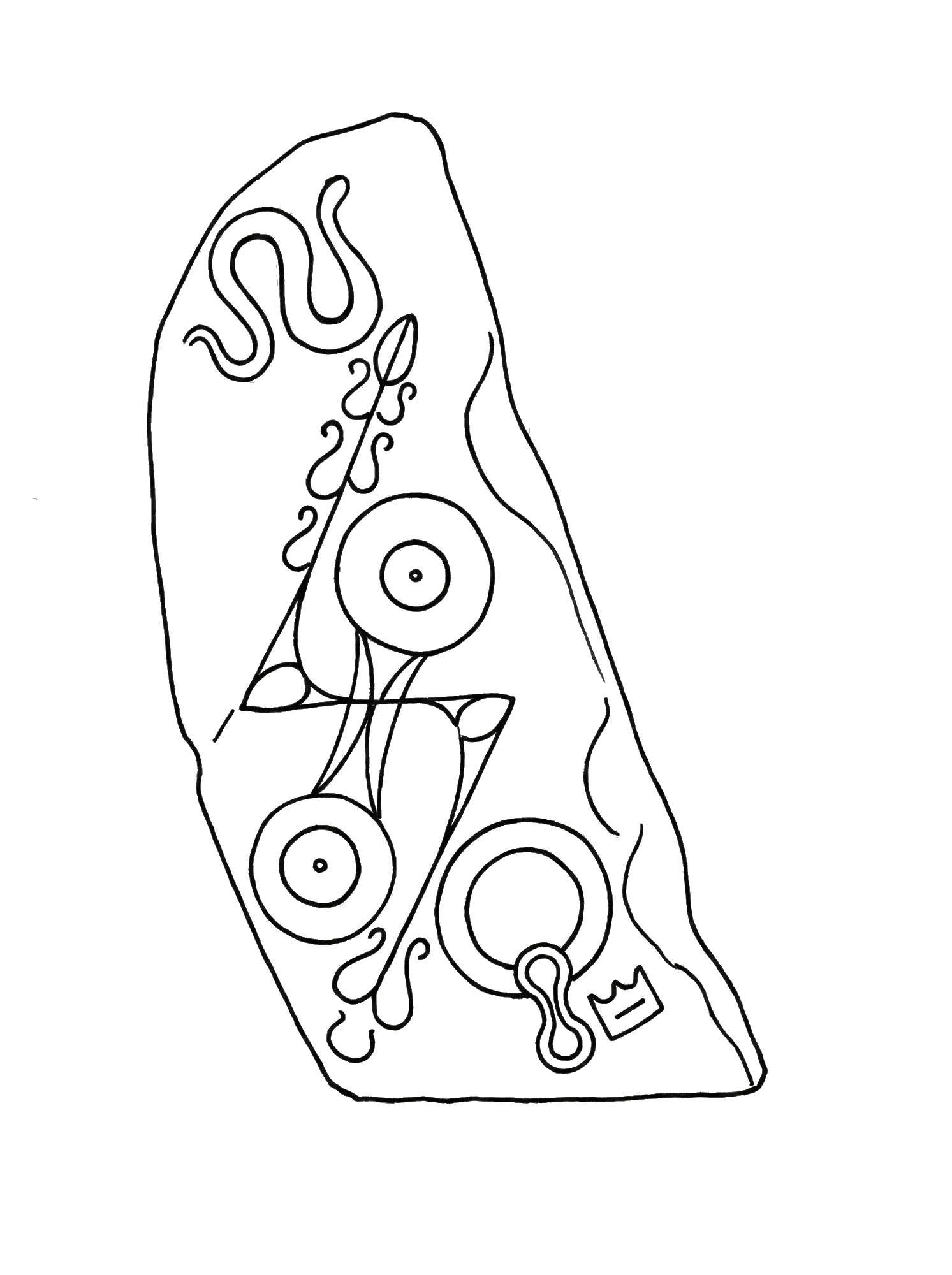
I ran a sample through my array. Natural crystal produced coherent output. Not noise—organization. The same kind of periodicity-with-variation we predicted in the '09 paper. The one we never published because we couldn't explain how symbol stones could encode mathematical relationships that anticipated modern topology by a millennium.
We were right. And now I have physical evidence.
I need your samples. I need to know if this is local anomaly or something bigger.
Call me when you get this. Any hour.
—Broichan
He sent it at 11:47 PM Pacific. Eight hours ahead in London—she'd see it when she woke.
Jennifer was already asleep. David sat in the dark of his home office, laptop glowing, and felt something he hadn't felt in years: hope. Not the careful optimism of grant applications, but the wild hope of someone who'd spent years on a secret obsession and just watched it become real.
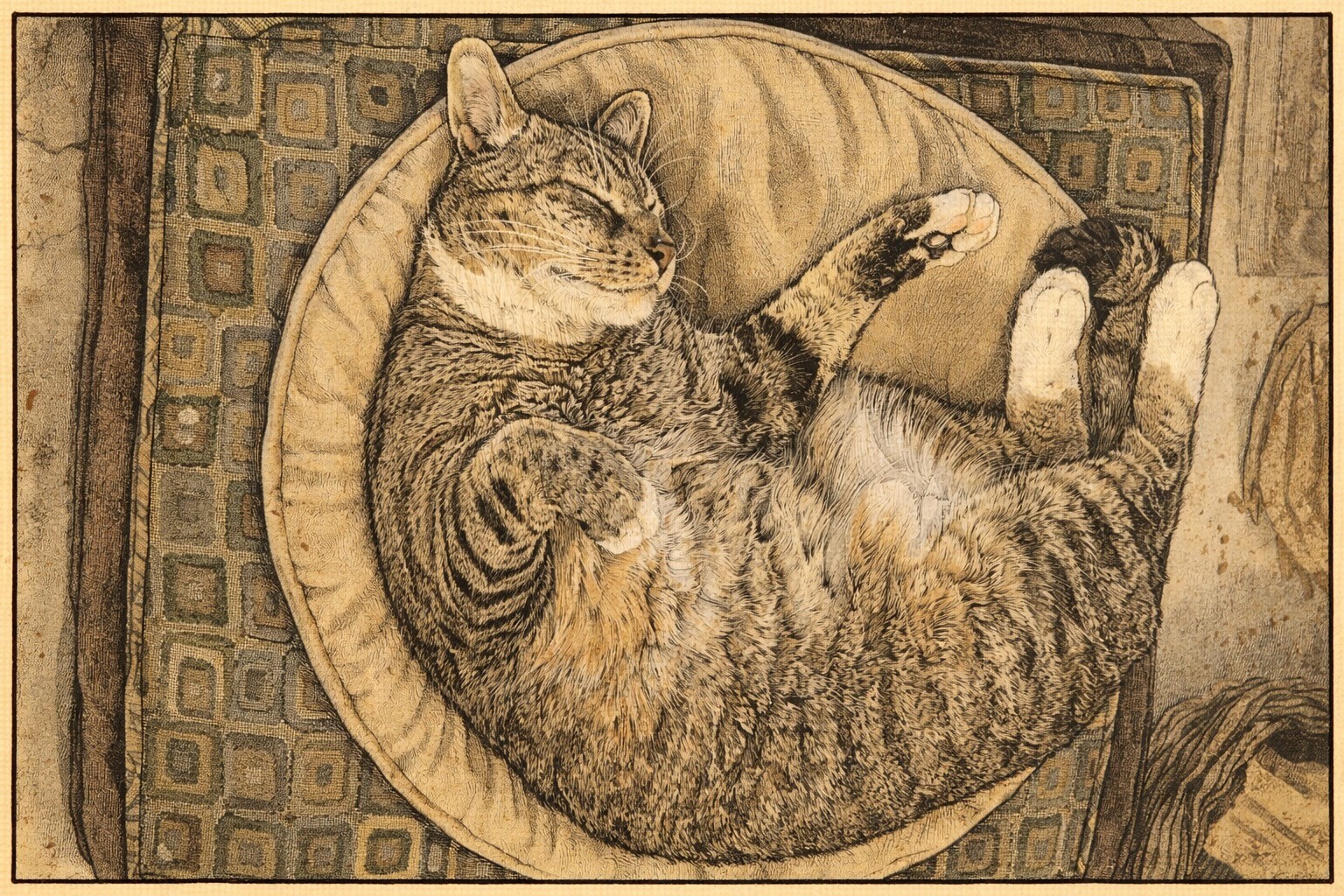
Margaret saw the email at 6:23 AM, sitting at her kitchen table with tea going cold. Her cat Pictavia had draped herself across the keyboard twice already, offended by the lack of attention.
She read it once, quickly. Then again, slowly.
Then she laughed—a sound that startled the cat and surprised herself.
I found it.
She picked up her phone and dialed before she could talk herself out of it.
"You brilliant, reckless man." Her voice came through at 11:52 PM, and David felt something unlock in his chest. "You built a quantum detector on our symbol stone mathematics and you didn't tell me?"
"I was afraid you'd think I'd lost my mind."
"I've thought you'd lost your mind since we started. That's never stopped me." He could hear her smiling. "Tell me everything."
He told her. Susan's drone footage. The spiral. The spectrometer readings at Bear Valley. The coherent output from natural crystal.
When he finished, the silence stretched.
"Margaret?"
"I'm here." Her voice had changed—softer, more careful. "David, I need to tell you something I've been waiting to tell you for a very long time."
"What?"
"I have samples. Twenty-seven years of samples, from extinction boundaries on three continents. K-Pg, P-Tr, Late Devonian, End-Ordovician." She paused. "They all show the same ordering. Identical signatures across events separated by hundreds of millions of years. I wrote a paper about it in 1998—my department head read the draft and asked if I was feeling all right. The paper went into a drawer."
David closed his eyes. She'd been sitting on this alone.
"Why didn't you tell me?"
"Because I didn't have a way to test it. I had measurements that looked like information encoding, but I couldn't prove it. Our mathematical work gave me language, but not mechanism." Her voice cracked slightly. "And because I was ashamed. Years of being too frightened to publish. I kept waiting for someone with equipment that could actually read what I'd been measuring."
"The isotope ratios," David said. "What do you see?"
"Ir-193/Ir-191 ranging from 1.69 to 1.72. Higher ratios in pure boundary material, lower in samples that have been in terrestrial contact longer. As if the material equilibrates over time."
"My Bear Valley sample came in at 1.69."
"Which would suggest longer terrestrial residence. Consistent with dispersal from a primary impact site." She took a breath. "David, there's more. I have access to the Beagle collections. Darwin's original specimens."
"You've tested them."
"The Punta Alta samples—dark layer fragments he pocketed in 1833—show identical ordering to my boundary layer collection. Darwin carried this home without knowing what it was."
David thought of the young naturalist at a cliff face in Argentina, pocketing fragments of something he couldn't possibly understand.
"We need to test your full collection," he said. "Every boundary, every site. If the ordering is consistent—"
"Then it's not local. It's global." Margaret's voice was steady. "But I can't ship my samples to California. Half are museum property. The Darwin material absolutely cannot leave the collection."
"What if we bring the equipment to you? The spectrometer I used at Bear Valley—I've modified it for this kind of detection. It's not as sensitive as the full array, but it reads the same signatures."
"You'd send equipment to London?"
"Equipment and an operator. Amara Okonkwo—she built half my sensor matrix. She's good, and she's discreet."
"You trust her with this?"
"She doesn't need the full context yet. Just the technical parameters."
Margaret was quiet. "If your equipment confirms what I've been measuring… if the ordering is consistent across all five boundaries…"
"Then you come to California. Not with samples—with yourself. We'll need you for what comes next."
"What comes next?"
David thought of Starseed's visions. Susan's plants. Convergences he couldn't explain but couldn't ignore.
"I don't know yet. But I think it's bigger than either of us imagined."
"Everything about this has been bigger than I imagined since 1998." She paused. "There's something else. A colleague at Aberdeen has been excavating a Pictish site at Rhynie—a ritual well, sealed since the Viking era. They found a crystal in the well chamber. Deliberately placed. Whatever it meant to them, they went to considerable trouble to protect it."
"You think it might be the same material?"
"The site correlates with the geology I've been mapping—one of the exposure points where my anomalous signatures cluster. That could be coincidence. Or it could mean they were responding to something in these locations." Her voice dropped. "When we know this is real, I'll bring the Rhynie crystal myself. That's not something I'm trusting to a courier."
David felt the hair rise on his arms. A crystal from a sealed Pictish well. A site that correlated with Margaret's geological anomalies.
"Send me the details on the Aberdeen excavation. Everything."
"I'll send the preliminary reports tonight." She paused. "And David? Thank you. For finding it. For building something that could finally read what I've been measuring." Her voice caught. "I thought I was alone with this."
"You were never alone," he said. "You had Broichan."
"Aye," she said softly. The accent was fully present now, unguarded. "I suppose I did."
The call ended. David sat in silence, phone in hand.
He opened his laptop and began composing an email to Amara. There was work to do.