Chapter
LEARNING THE INSTRUMENT
2,111 words · 11 min read
Amara had built interfaces between impossible things before.
Her doctoral work at Imperial had been about exactly this—translating quantum states into classical readouts, making the unmeasurable measurable. The iridium-aerogel matrices had been a step beyond that: building a detector sensitive enough to read crystallographic coherence at scales where observation itself became an intervention. Every sensor she'd ever designed was fundamentally a translator.
But she'd never built a translator for someone else's consciousness.
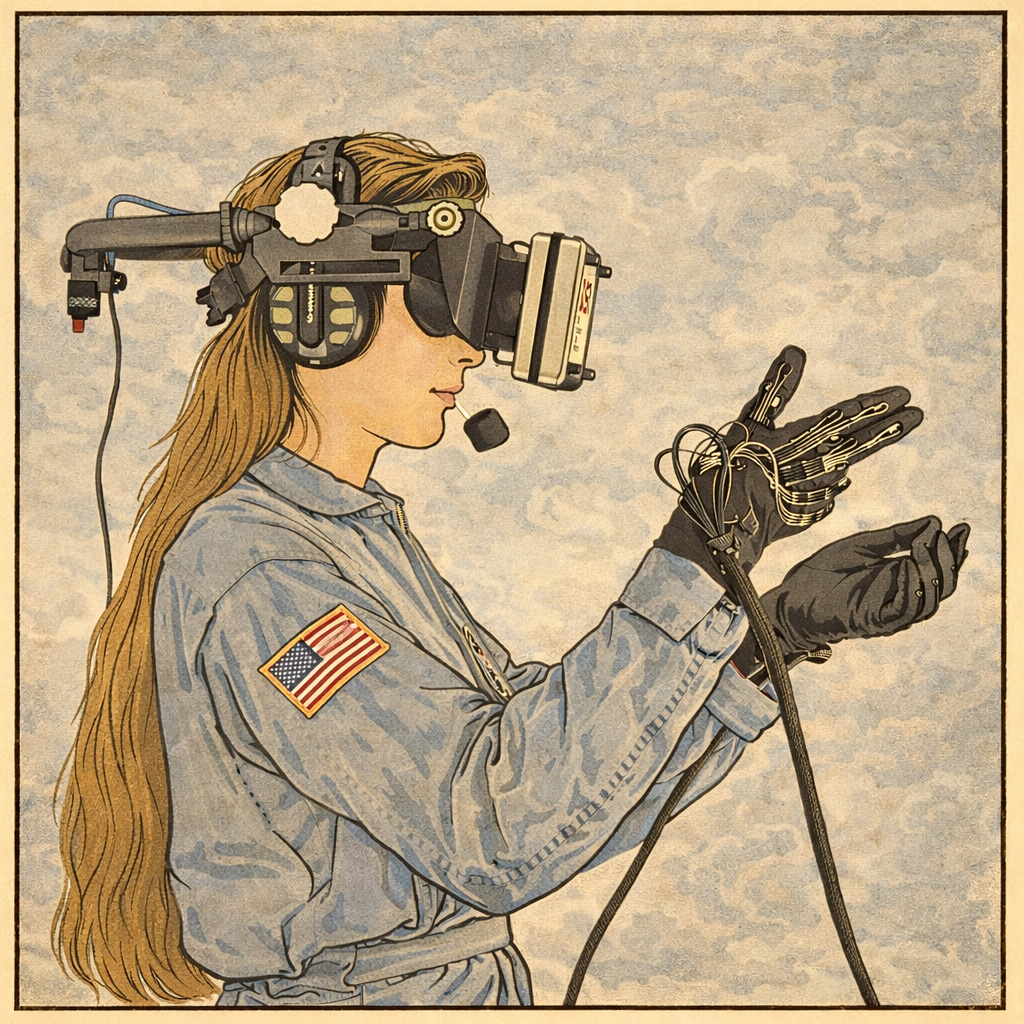
The helmet sat on her workbench. It looked almost ordinary—a modified VR headset with EEG sensors woven through the padding, fiber optic feeds running to the quantum array, a heads-up display that would overlay rendered environments onto the wearer's vision. She'd pulled components from three different research projects, called in favors from the Stanford neuroimaging lab, written custom firmware across a week of long nights.
The hardware was solid. The problem was the person who would wear it.
"Walk me through the signal chain one more time," David said from the main console.
The team had assembled in what they were calling the Navigation Room—a cleared section of David's quantum facility with blackout curtains and motion-capture cameras. Susan sat with her tablet, scrolling through her cladogram. Margaret studied the Pictish symbol reference sheets. Jennifer stood near Starseed, who was doing breathing exercises in the corner.
Amara moved to the whiteboard. "Starseed interfaces with the detector. His neurology perceives the crystallographic output as something like synesthetic experience—we don't fully understand what he sees, but the fMRI sessions showed consistent activation patterns when he's receiving."
She drew connecting lines. "The EEG mesh captures his neural dynamics in real-time. Not his thoughts—the rhythm of his attention, the signatures of recognition. My software correlates those dynamics with the detector's direct output. When his brain does this"—she tapped one box—"the detector is measuring that. The correlation lets us build a translation matrix."
"And the rendering?" Margaret asked.
"The correlated data feeds a 3D engine. It generates a visualization representing what Starseed perceives, translated into something we can see. Every Pictish symbol class has a visual representation—crescents as navigation vectors, zoomorphs positioned in Susan's phylogenetic architecture."
"So when Starseed perceives a swimming elephant," Susan said, "we see it at the appropriate branch point in the evolutionary tree."
"If I've calibrated correctly." Amara felt the weight of that conditional. "The whole system depends on the assumption that his perception and the detector output are measuring the same phenomenon. If they're not—if his visions are noise or pathology—then what we render won't correspond to anything real."
"It's real," Starseed said from his corner, eyes still closed. "Six years of real. I just didn't have the right way to understand it."
The first minutes were chaos.
Amara watched from the monitoring station as data flooded the system. Starseed's EEG readings spiked and fluctuated, nothing like the controlled fMRI sessions. The translation matrix hunted for stable mappings in a storm of signal.
"The detector's entanglement patterns are shifting faster than I've ever seen," David said. "It's like it's responding to him. Not just being read—responding."
The team's VR headsets showed fragments—geometric shapes flickering in and out of existence, zoomorphic forms that appeared and dissolved, spatial relationships that contradicted themselves.
"It's not working," Margaret said. "The visualization is incoherent."
"He's not navigating," Susan said. "He's drowning."
Amara keyed the intercom. "Starseed. Can you hear me?"
"I hear everything." His voice came ragged, edged with panic. "There's no edges. No boundaries. When I'm in the flumes, the water creates a container. Here it's just—open. I can't—"
His biometrics flashed warning. Heart rate 142 and climbing. The EEG showed chaotic desynchronization—not perception but overwhelming stress.
"We need to pull him out," Amara said.
"Wait." Jennifer was already moving toward him. She knelt beside his chair, placing both hands on his chest. "Starseed. David. Listen to me. Come back to your breath."
"I can't—the signal—"
"The signal will wait. It's been waiting longer than either of us can imagine. It can wait for three breaths." Her voice carried the authority of someone who'd talked people down from panic attacks and bad trips. "Breathe with me. In through the nose."
David's hand hovered over the emergency disconnect. But on the biometric display, Starseed's heart rate stuttered, then began to slow.
"Feel my hands on your chest. That's your body. That's real. That's here." Jennifer breathed audibly. "The signal is information. Just information. You've been receiving it for years. It didn't destroy you at Wilbur. It won't destroy you here."
"It's bigger," Starseed whispered. "Without the water—"
"Then we find boundaries together. You always said certain spots in the water feel different. Quieter."
"The sweet spots."
"Find one now. Something contained. Don't try to perceive everything. Find one edge."
Silence. His heart rate dropped through 110, 100, 95. His EEG began showing coherent patterns again.
David stared at the quantum array. "The detector's stabilizing too. The entanglement patterns are following his neural organization. As he calms down, it calms down."
"Bidirectional interface," Amara murmured. "He's affecting it." She was already thinking about the next iteration—the correlation work was too complex for her hand-tuned algorithms. They needed machine learning, something that could find patterns in the quantum-neural mapping faster than she could code rules.
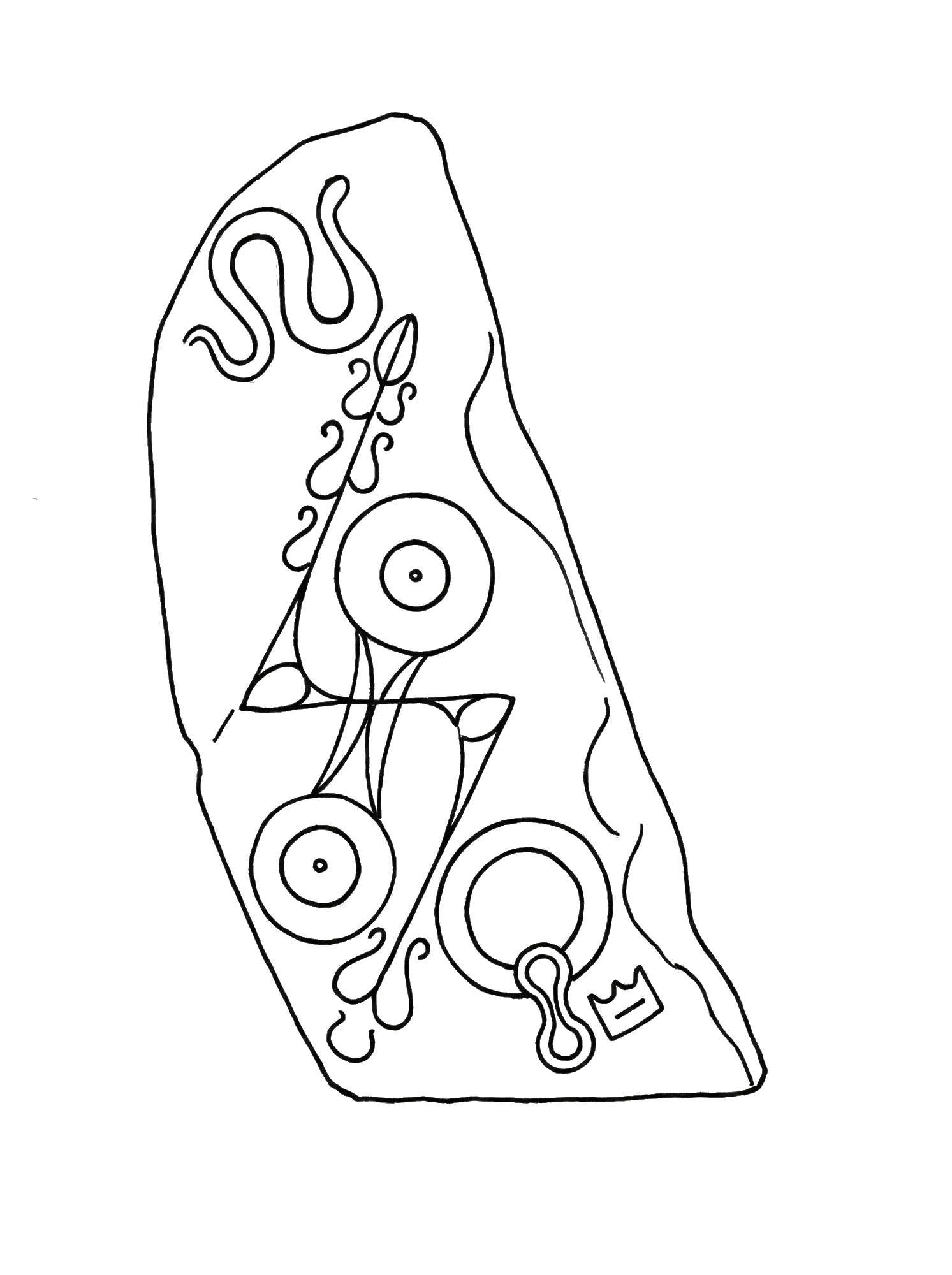
Gradually, the visualization organized. A geometric form emerged—Amara recognized it from Margaret's symbol sheets. A crescent, curved like a bow, bisected by a vertical rod.
"That's navigation," Margaret said. "Crescent and V-rod. He's found a navigation control."
The team's VR displays snapped into focus. They seemed to stand in a vast dark space. The crescent floated before them, glowing with soft phosphorescence. Radiating outward from it, lines of connection extended toward dim shapes in the distance.
The team's VR displays snapped into focus. They seemed to stand in a vast dark space. The crescent floated before them, glowing with soft phosphorescence. Radiating outward from it, lines of connection extended toward dim shapes in the distance.
"Branching structure," Susan said. She pulled up her cladogram on her tablet, studying the lines. "The pattern looks similar to phylogenetic architecture, but I can't tell if that's real or if the visualization is just defaulting to tree-form because that's how I built it."
"The detector readings are changing as the visualization shifts," David said. "Different regions show different complexity signatures. Whether that corresponds to your cladogram—we'd need to test it."
"How?"
"Navigate somewhere. See if the detector output matches what your model predicts for that position."
"Where do we go?" Susan asked.
Starseed's voice came through, strained but controlled. Jennifer was still beside him, breathing with him. "The crescent is like a cursor waiting for input. I need to indicate direction, but I don't know the vocabulary."
Susan stepped forward in the virtual space. "Let's test it. If the zoomorphs work like I think—try perceiving something mammalian. Four-legged, warm-blooded."
Long seconds passed. Jennifer murmured something low, her hand steady on Starseed's shoulder.
Then, in the visualization, a shape began to coalesce. Four-legged, solid, with horns that curved like new moons. A bull—stylized, abstracted, its joints rendered as spirals.
"That's a Pictish bull," Margaret said. "Classic zoomorph."
"Amara, mark that position," Susan said. "If my model is right, moving toward it should take us to the mammalian branch."
Amara tagged it. "Can you move toward it, Starseed?"
"The crescent is responding. Like it recognizes the combination."
The visualization shifted—not movement exactly, more like a change in perspective. The bull grew closer while other branching lines receded. The dark space began to fill with texture. Hints of environment.
"It's working," David said quietly. "We're actually accessing different regions. Whatever this is."
They worked for three hours.
The navigation was brutal for Starseed. Each movement required intense concentration, a kind of synesthetic wayfinding that drew on reserves he'd never known he had. Three times they had to pause—Jennifer calling halt when his biometrics crossed into dangerous territory.
During the second pause, his hands wouldn't stop shaking.
"The signal doesn't hurt," he said, his voice hollow. "It's just too much. Like staring at the sun. Every time I navigate somewhere new, it's like a library opening. A library with infinite rooms. And I have to not-look at almost everything just to focus on moving."
Jennifer had him lying on the floor, knees bent, her hands pressing down on his shoulders. "What does not-looking feel like?"
"Holding doors closed. Dozens of them. All the time." He laughed, and there was an edge of hysteria in it. "At Wilbur I thought I was receiving wisdom. I was receiving a tsunami through a keyhole, and the keyhole was the only thing keeping me sane."
David crouched beside them. "When you're navigating, are you just reading? Or does it feel like something is reading you back?"
Starseed was quiet. "Both. It's like it wants to be navigated. And when I focus on a region, I can feel it focusing on me. Not intelligence. More like resonance. Like two tuning forks vibrating together."
"Two complex systems finding equilibrium," David said. "The material has been self-organizing for geological time. It's developed properties that respond, that find stable configurations with whatever interfaces with it."
"So I'm changing it? By navigating?"
"You're affecting it. Whether the effects persist after you disconnect—we'll need to track that."
But they learned.
Susan's cladistic thinking proved useful. When Starseed perceived disconnected symbols, she could propose interpretations. "Try navigating away from that—if I'm right about scale, you should see higher taxonomic levels." Or: "The serpent keeps appearing when you go deeper. It might mark basal vertebrates—test it by looking for something more recent."
Margaret's Pictish scholarship provided grammar. "The notched rectangles filter data channels. Can you perceive nested rectangles? That might let us select for geological versus biological record."
David monitored the quantum mechanics. "Coherence spike—you just accessed a high-complexity region. Whatever you touched contains more accumulated organization than everything else combined."
Jennifer kept Starseed stable. "When you say 'pressure,' do you mean the symbol is pushing back, or that you feel urgency? We need consistent terminology. And breathe—you're holding your breath again."
And Amara kept the system running. Adjusting calibration. Refining the translation matrix. Watching for signs of fatigue or distress. She was the instrument maker hearing her instrument played for the first time—and already cataloguing what the next version would need. Better pattern recognition. Adaptive algorithms. Something that could learn the correlations instead of having them hand-coded.
By the end, they could reliably navigate to three positions that correlated with Susan's model: what she was calling the mammalian branch, marked by the bull; an avian region marked by a stylized eagle; and something deeper that the serpentine forms seemed to indicate—possibly the vertebrate-invertebrate divergence, though that was speculation.
"The correlations are holding," Susan said, reviewing the data. "We can navigate to what look like major taxonomic categories. But the detailed structure—that's locked behind higher access depths. The complex knotwork patterns."
"Which correlate with more elaborate inputs," Amara said. "The more intricate the symbol, the more depth it accesses. The Picts weren't just decorating—they were discovering access patterns."
"Protocols Starseed doesn't know how to generate," Margaret added.
"Not yet." She studied a photograph of intricate Aberdeenshire knotwork. "But the Picts did. If we can understand the mathematical relationships, we might be able to teach him."
The lab emptied slowly.
Susan left with her tablet full of navigation data. Margaret gathered the symbol photographs. Jennifer guided Starseed toward the door—he was leaning heavily on her, pale and hollowed by exhaustion.
At the threshold, he turned back.
"It's not trying to tell us anything," he said. "That's what I kept getting wrong at Wilbur. It's not a message. It's not wisdom. It's just a structure. The most complex self-organized structure that exists, built from millions of years of biological history. The question isn't what it's telling us."
He looked down at his trembling hands.
"The question is what it's becoming. And what we become by learning to navigate it."
Jennifer helped him through the door.
Amara began her diagnostics, checking calibrations. David stayed at the quantum array, scrolling through data he'd spend all night analyzing.
They had navigated using Pictish symbols as a control interface. The system worked.
The problem was, they'd barely begun to understand what they were navigating. Something that responded, adapted, found resonance with the minds that touched it. Something that had been self-organizing for longer than mammals had existed.
"Same time tomorrow?" she asked.
David nodded without looking up. "Same time tomorrow."